
Quick answer: Most sinus infections are viral and clear on their own in about 7 to 10 days with rest, fluids, saline rinses, and over-the-counter relief. If your symptoms drag past 10 days without improving, or you feel better and then suddenly get worse, that “double sickening” pattern points to a bacterial infection that may need a provider. Our Covington team evaluates sinus infections all week long, 7am to 7pm, and walk-ins are always welcome.
TL;DR: Viral sinus infections clear in about a week to ten days with self-care; symptoms past 10 days, a “double sickening” turn, or a high fever are your cue to get evaluated. Allergies feel similar but bring itchy eyes and no fever.
Is it a sinus infection or allergies?
Telling a sinus infection from fall allergies comes down to a few clues: allergies bring thin, watery drainage and itchy, watery eyes with no fever, while a sinus infection from a cold usually brings thicker, yellowish drainage and sometimes a low-grade fever. According to the American College of Allergy, Asthma and Immunology, hay fever symptoms can begin immediately after you’re exposed to a trigger like ragweed pollen, while a cold tends to show up a day or two after exposure (ACAAI, Hay Fever).
Allergies and sinus infections are also linked. Untreated allergies leave your nasal passages swollen and inflamed, and that congestion can block normal sinus drainage and set the stage for a sinus infection. Here on the Louisiana Northshore, ragweed season runs from late August into November and peaks in September, so this is the time of year when Covington, Mandeville, and Madisonville families see the most overlap between allergy flares and sinus trouble. New Orleans lands at number 18 on the Asthma and Allergy Foundation of America’s 2026 Allergy Capitals list, a reminder that our whole region is a tough place for allergy sufferers (AAFA, 2026 Allergy Capitals).
What are the signs of a sinus infection?
A sinus infection, or sinusitis, is inflammation of the sinuses that usually follows a cold. Common signs include facial pain or pressure around the cheeks, eyes, and forehead, a stuffy or runny nose, thick nasal drainage, reduced sense of smell, and sometimes a cough, headache, or low fever. The pressure often gets worse when you bend forward.
The most common signs are:
- Facial pressure or pain over the cheeks, forehead, or around the eyes
- Thick, discolored nasal drainage or post-nasal drip
- Nasal congestion or blockage
- A reduced sense of smell or taste
- Headache, cough, or a low-grade fever
Mucus color alone isn’t a reliable way to tell a viral infection from a bacterial one. Yellow or green mucus is a normal part of your immune response and doesn’t automatically mean you need antibiotics.
How do I know if my sinus infection is bacterial or viral?
Timing is the best clue. In the early days, a viral and a bacterial sinus infection look almost identical, so there’s no way to tell them apart at the start. Family-medicine guidance published by the American Academy of Family Physicians puts it this way: once symptoms persist for 10 days without improving, the probability that the infection is bacterial rises to about 60% (AAFP, Current Concepts in Adult Acute Rhinosinusitis).
Three patterns suggest a bacterial infection worth having checked:
- Symptoms lasting 10 or more days without any sign of getting better
- “Double sickening” where you start to improve, then suddenly get worse again around day five to ten
- Severe symptoms with a high fever and thick drainage for three or more days in a row
Most viral sinus infections improve within 7 to 10 days on their own, which is exactly why providers often recommend watchful waiting before reaching for antibiotics.
What’s the treatment for a sinus infection?
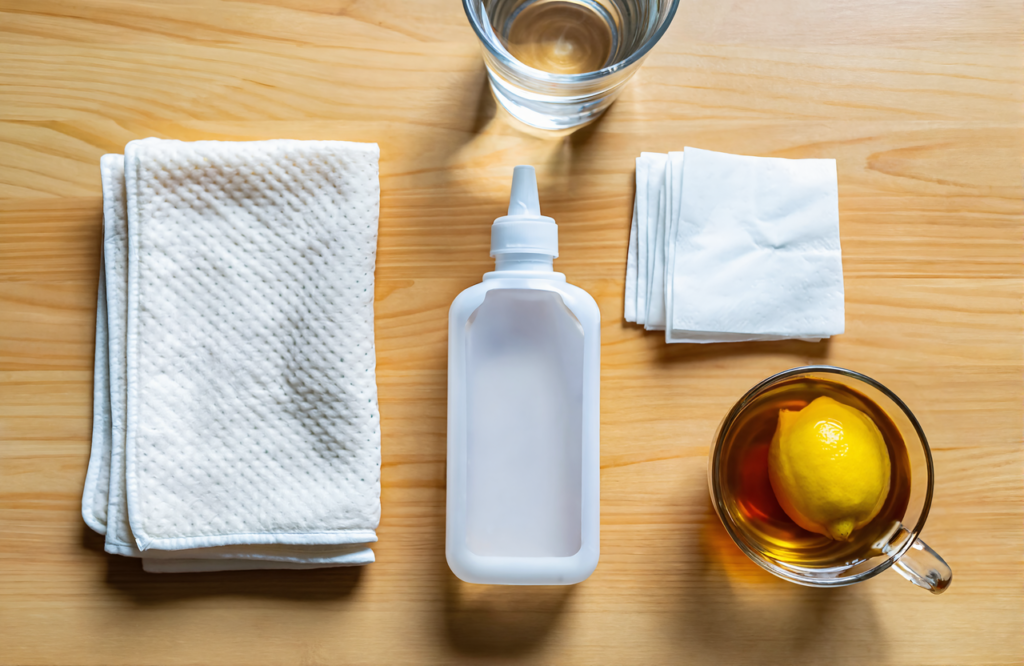
Treatment for a sinus infection starts with symptom relief, not antibiotics. For a viral infection, the goal is to keep you comfortable while your body clears it. The American Academy of Otolaryngology suggests saline nasal irrigation, topical intranasal steroid sprays, and pain relievers as options for symptom relief in uncomplicated cases (AAO-HNS, Sinusitis). The common options stack up like this:
That OTC and home-remedy route is treatment for a sinus infection without antibiotics, and it’s what most people actually need. Helpful sinus infection treatment home remedies include a saline rinse, a warm compress over the face, steam from a hot shower, staying well hydrated, and sleeping with your head slightly elevated. OTC treatment for a sinus infection also covers decongestants and pain relievers used as directed on the label.
When a provider does confirm a bacterial infection, antibiotics help, but the benefit is smaller than many people expect. The AAFP points to a Cochrane review showing antibiotics raise the cure rate by only about 5 to 6 percentage points compared with symptom care alone, which is why they’re used selectively rather than for every sinus infection.
When should you see a provider in Covington, LA?
See a provider if your symptoms last more than 10 days without improving, get worse after starting to improve, or come with a high fever. A quick in-person evaluation helps sort out whether you’re dealing with allergies, a lingering virus, or a bacterial infection that needs a prescription. Total Health Urgent Care treats sinus infections for patients of all ages, with evaluation, prescribed medication when appropriate, and referral to a specialist for recurring infections.
For a medical emergency, call 911. Seek emergency care right away if you have a severe headache, vision changes, swelling or redness around the eyes, a stiff neck, confusion, or a very high fever, since these can signal a rare but serious complication.
If you searched “urgent care near me” because your sinus symptoms won’t quit, walk-ins are welcome at our clinic on Hwy 25, and we keep the same hours every day of the week. We have an on-site lab for rapid strep, flu, and other testing when your symptoms overlap, plus transparent self-pay pricing at $130 for an office visit if you’re uninsured. You can review our full urgent care services or learn more about walk-in care in Covington before you come in.
Frequently asked questions
Most sinus infections are viral and improve within 7 to 10 days with rest, fluids, and symptom relief. If yours lasts longer than 10 days without improving, it’s a good idea to get checked.
Usually, yes. Because most are viral, they resolve without a prescription once your immune system catches up. The main reason to come in is when the timeline stretches past 10 days or your symptoms take a sudden turn for the worse.
Often not. Antibiotics only help bacterial sinus infections, and even then the benefit is modest. A provider looks at how long symptoms have lasted and whether they’ve worsened before deciding if antibiotics are the right call.
There’s no instant cure, but you can speed comfort with saline nasal irrigation, steam, warm compresses, plenty of fluids, and OTC pain relievers or decongestants used as directed. If symptoms stall past 10 days, an in-person evaluation helps.
It’s rare, but a sinus infection can occasionally spread. Warning signs that need urgent attention include swelling or redness around the eyes, vision changes, a severe headache, a stiff neck, or confusion. If you notice these, seek emergency care.
It may be. Allergies bring thin, watery drainage and itchy eyes with no fever, while a sinus infection tends to bring thicker drainage and sometimes a low fever. During Northshore ragweed season the two often overlap, and a provider can help you tell the difference.
This article was put together by the care team at Total Health Urgent Care here in Covington, the clinic Jennifer Duncan, APRN, MSN, FNP-C opened after more than twenty years in emergency and urgent care. Think of it as general guidance, not a stand-in for being seen in person. Questions? Reach out through our Contact us page or by phone at (985) 400-5370. We’re located at 73015 Hwy 25 Suite A, Covington, LA 70435, and the doors stay open 7am to 7pm daily. We look after Northshore families in Abita Springs, Folsom, Madisonville, Mandeville, Franklinton, and communities all around St. Tammany Parish.