
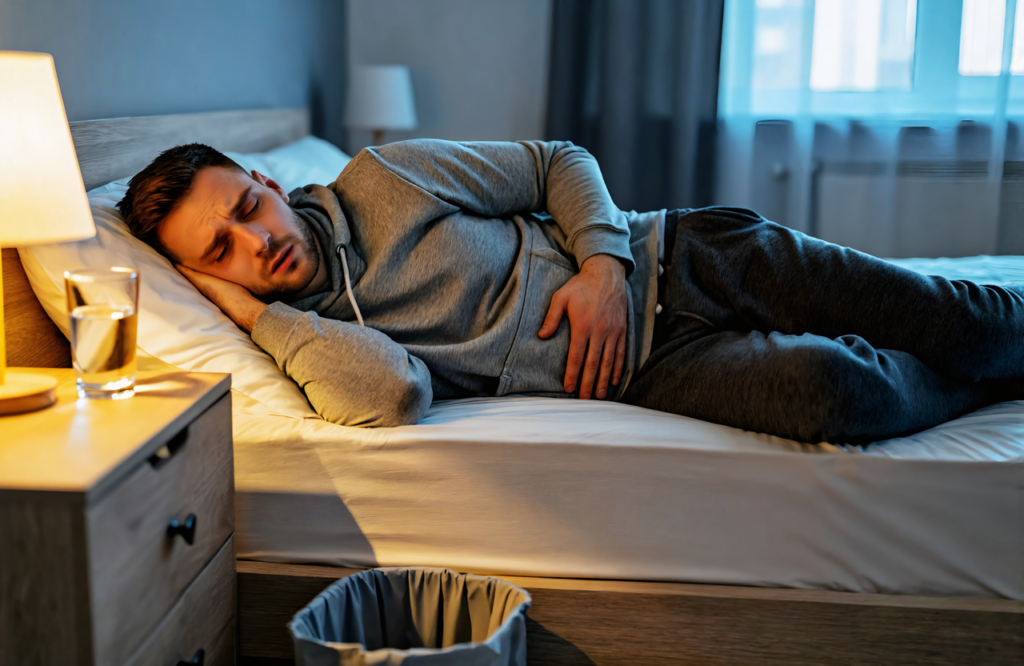
Norovirus symptoms usually start 12 to 48 hours after you’re exposed, according to the CDC, and they can hit hard: diarrhea, vomiting, nausea, and stomach pain, sometimes with fever, headache, and body aches. The CDC says most people get better within 1 to 3 days. If fluids won’t stay down or you’re starting to look dehydrated, Total Health Urgent Care welcomes walk-in patients at our Covington clinic seven days a week, opening at 7 a.m. and closing at 7 p.m. The CDC notes that severe dehydration may require hospitalization, so call 911 in an emergency.
Quick answers:
- Folks call it the stomach bug or stomach flu, yet the CDC says norovirus has nothing to do with influenza.
- You’re most contagious while you have symptoms (especially vomiting) and during the first few days after you feel better.
- Hand sanitizer alone doesn’t work well against norovirus. Soap and water for at least 20 seconds is the CDC’s go-to.
- Feeling dizzy when you stand up, peeing less, or a child crying with few or no tears are dehydration warning signs worth getting checked.
Why does norovirus season matter this fall?
Norovirus can show up any month, but the CDC’s Norovirus Facts and Stats page puts it plainly: “Norovirus outbreaks occur throughout the year but are most common from November to April.” Nationally, that means the peak months start in November.
Early numbers for the new season are in. The CDC’s NoroSTAT Data page counted 27 norovirus outbreaks reported by participating states from August 1 through September 4, 2026, compared with 29 during the same period last season. CDC says this season’s total falls within the middle 50% of outbreaks reported for the same period across the 2012 to 2026 seasonal years. The November to April peak is still ahead.
It’s a big bug, too. On that same Facts and Stats page, the CDC says that each year in the United States, norovirus causes on average 19 to 21 million illnesses and 109,000 hospitalizations, along with 900 deaths, mostly among adults aged 65 and older.
Louisiana has seen it up close. In February 2025, the Louisiana Department of Health recalled oysters and closed Oyster Harvesting Area 3, east of Lake Borgne, after norovirus-like illnesses were reported among people who ate oysters from that area. If raw oysters are on your fall menu, keep in mind the CDC’s advice on its About Norovirus page: “To avoid getting norovirus, do not eat raw or undercooked shellfish.”
What are the symptoms of norovirus?
The CDC lists four most common norovirus symptoms: diarrhea, vomiting, nausea, and stomach pain. Other symptoms can include fever, headache, and body aches. Per the CDC’s About Norovirus page, “A person usually develops symptoms 12 to 48 hours after being exposed to norovirus.”
- Most common: diarrhea, vomiting, nausea, stomach pain
- Also possible: fever, headache, body aches
- How bad it gets: the CDC says you can feel extremely ill and vomit or have diarrhea many times a day
How long does norovirus last and stay contagious?
Most people with norovirus get better within 1 to 3 days, the CDC says, but you can keep spreading it after you feel better. The CDC’s How Norovirus Spreads page says you’re most contagious when you have symptoms, especially vomiting, and during the first few days after you feel better. It adds that “studies have shown that you can still spread norovirus for 2 weeks or more after you feel better.”
Sources: the CDC’s About Norovirus, How Norovirus Spreads, and How to Prevent Norovirus pages.
Norovirus spreads easily for a reason. On the How Norovirus Spreads page, the CDC notes that a sick person can shed billions of norovirus particles, and “It only takes a few norovirus particles to make you and other people sick.” The CDC’s Norovirus Outbreaks page says outbreaks “frequently occur in schools, childcare centers, colleges, and universities.” The same page notes that over half of all norovirus outbreaks reported in the United States happen in long-term care facilities.
Is it norovirus, food poisoning, or the flu?
Norovirus is a common cause of food poisoning, and it isn’t the flu. On its Norovirus Facts and Stats page, the CDC calls norovirus the leading cause of foodborne illness in the United States and adds, “It causes 58% of foodborne illnesses acquired in the United States.” The timing can offer a clue, since the CDC’s Food Poisoning Symptoms page lists different start times for different germs:
The flu is a separate illness altogether. As the CDC’s About Norovirus page puts it, “The flu is caused by the influenza virus.” Norovirus is a separate germ entirely. Coughing and achy instead? Our flu treatment guide for Covington covers that, and our post on food poisoning and when to see a doctor helps if you suspect a bad meal.
How do you know if norovirus has dehydrated you?
Norovirus can lead to dehydration, especially in young children, older adults, and people with other illnesses, the CDC says. Its About Norovirus page lists these symptoms of dehydration:
- Decreased urination
- Dry mouth and throat
- Feeling dizzy when standing up
- Crying with few or no tears
- Unusual sleepiness or fussiness
The fix starts at home. The CDC says you “should drink plenty of liquids to replace fluid lost from vomiting and diarrhea.” It also notes that “Oral rehydration fluids that you can get over the counter are most helpful for mild dehydration.” Sports drinks and other drinks without caffeine or alcohol can help with mild dehydration, the CDC says, though they may not replace important nutrients and minerals. We know, even water can feel like a big ask on day one.
When home fluids aren’t enough, the CDC is clear: “Severe dehydration may require hospitalization for treatment with fluids given through your vein (intravenous or IV fluids). If you think you or someone you are caring for is severely dehydrated, call your doctor.” For more on how IV fluids work, see our post on IV fluids for dehydration.
When should you see a doctor for norovirus symptoms?
The CDC says most people with norovirus get better within 1 to 3 days, but some signs mean you should be seen right away. NIDDK, part of the National Institutes of Health, names norovirus as the most common cause of viral gastroenteritis, and its Symptoms and Causes of Viral Gastroenteritis page says adults with any of these should see a doctor right away:
- Change in mental state, such as irritability or lack of energy
- Diarrhea lasting more than 2 days
- High fever
- Vomiting often
- Six or more loose stools in a day
- Severe pain in the abdomen or rectum
- Stools that are black and tarry or contain blood or pus
- Symptoms of dehydration
NIDDK also says older adults, pregnant women, and adults with a weakened immune system or another health condition should see a doctor right away if they have any symptoms of viral gastroenteritis, and that adults should get seen if they can’t drink enough liquids or oral rehydration solutions to prevent dehydration.
With children, the American Academy of Pediatrics’ Diarrhea in Children: What Parents Need to Know page says to call your child’s doctor right away for any signs and symptoms of dehydration. It also says to call your pediatrician if a child with diarrhea has:
- Fever that lasts longer than 24 to 48 hours
- Bloody stools
- Vomiting that lasts more than 12 to 24 hours
- Vomit that looks green, tinged with blood, or like coffee grounds
- A belly that looks swollen
- Will not eat or drink
- Severe belly pain
- Rash or jaundice (yellow color of skin and eyes)
In a medical emergency, dial 911.
What can urgent care do for norovirus?
No medicine cures norovirus, so an urgent care visit isn’t about a cure. The CDC says, “There is no specific medicine to treat people with norovirus illness.” It also says, “Antibiotic drugs will not help treat norovirus infections because they fight bacteria, not viruses.” Instead, a visit focuses on the care our services list describes, like evaluating dehydration and prescribing medication when it’s needed.
Our list of urgent care services spells out that care in plain terms:
- Vomiting: “Evaluation and examination, labs if needed, prescribed medication along with IV fluids if needed. Plan of care provided.”
- Nausea: “Evaluation and examination, prescribed medication, plan of care provided.”
- IV fluids: “Evaluation of dehydration, illness, or electrolyte imbalance. Intravenous fluids as needed. Ask about our hydration station.”
One caveat from the CDC: severe dehydration may require hospitalization, so if you’re very dehydrated, a hospital may be the right place. Diarrhea is on our services list too, though the site doesn’t describe that service in detail yet, and the same list includes on-site lab testing and referrals to specialists based on patient need. Don’t expect a lab test for every stomach bug, though. NIDDK’s Diagnosis of Viral Gastroenteritis page says doctors often diagnose viral gastroenteritis based on your symptoms, and mild, short cases typically don’t need tests.
Without insurance, an office visit here runs $130, and that price takes in the exam, referrals, and prescriptions if you need them. Our pricing and insurance page doesn’t list a separate price for IV fluids given during an urgent care visit, so phone (985) 400-5370 and ask. We take most major health insurance plans as well.
How do you stop norovirus from spreading at home?
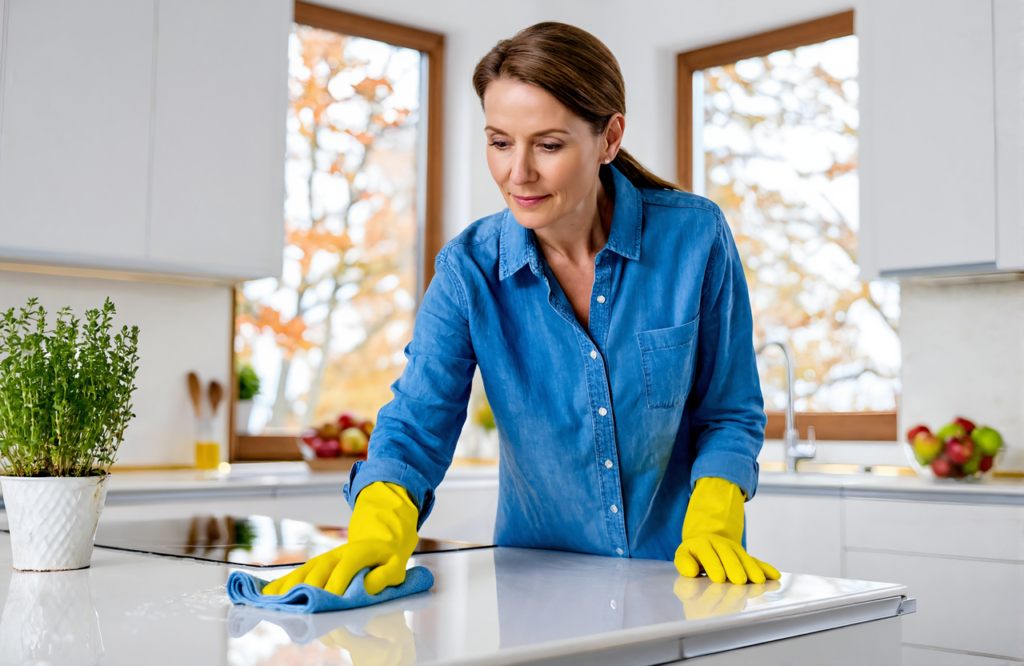
Stopping norovirus at home starts with soap and water, since hand sanitizer doesn’t work well against it. The CDC’s How to Prevent Norovirus page also covers cleanup, bleach, hot laundry, and a 48-hour wait. The steps, in order:
- Wash your hands the right way. Use soap and water for at least 20 seconds, especially after using the toilet or changing diapers and before handling food. The CDC says, “Hand sanitizer does not work well against norovirus.” Use it in addition to handwashing, never instead of it.
- Clean up fast. Wear rubber or disposable gloves, wipe the entire area with paper towels, and toss them in a plastic trash bag.
- Disinfect with bleach. The CDC recommends a chlorine bleach solution of 5 to 25 tablespoons of household bleach (5% to 8%) per gallon of water, or an EPA-registered disinfecting product against norovirus. Leave bleach on the area for at least 5 minutes, then clean the entire area again with soap and hot water.
- Wash laundry hot. Don’t shake soiled items. Wash with detergent and hot water at the maximum available cycle length, then machine dry on the highest heat setting.
- Stay out of the kitchen. Don’t prepare food or care for others while you’re sick, and wait at least 2 days (48 hours) after symptoms stop.
- Cook shellfish all the way. The CDC says to cook oysters and other shellfish to an internal temperature of at least 145°F.
Bleach matters because, per the CDC’s Norovirus Outbreaks page, norovirus “can persist on surfaces for days or weeks and is resistant to many common disinfectants.” Headed to the Wooden Boat Festival in Madisonville on October 17 and 18, or the Washington Parish Fair in Franklinton from October 21 to 25? Wash up with soap and water before you eat, and skip the crowds if your stomach’s been acting up.
Need an urgent care near me for a stomach bug?
If you’re anywhere near Covington, we’ve got you. Total Health Urgent Care is at 73015 Hwy 25, Suite A, just north of downtown Covington close to where Hwy 190 meets Hwy 25, and our doors are open daily with hours of 7 a.m. through 7 p.m. Walk-ins are welcome, and nausea, vomiting, and diarrhea are all on our services list.
We’re close to Folsom and Franklinton, and we also serve Abita Springs, Mandeville, Madisonville, and St. Benedict. What should the best urgent care for a stomach bug offer? We’d want three things: open on a Sunday, able to evaluate dehydration, and able to give IV fluids as needed. Our clinic does all three. If dehydration turns severe, though, the CDC says it may require hospitalization, and a medical emergency means calling 911. Our founder, Jennifer Duncan, APRN, MSN, FNP-C, has worked in emergency and urgent care medicine for more than 25 years. Learn more on our urgent care in Covington, LA page.
Frequently asked questions
You’re most contagious while you have symptoms, especially vomiting, and during the first few days after you feel better. The CDC says you can still spread norovirus for 2 weeks or more after you feel better, so keep up the handwashing.
Yes, many times over a lifetime. The CDC’s About Norovirus page explains there are many different types of noroviruses, and getting sick with one type may not protect you against the others.
The CDC doesn’t rank symptoms by which shows up first. It lists diarrhea, vomiting, nausea, and stomach pain as the most common, sometimes with fever, headache, and body aches, and they usually start 12 to 48 hours after you’re exposed.
The American Academy of Pediatrics says a child is less likely to pass norovirus to others once vomiting and diarrhea have been gone for at least 48 hours. Check with your school or child care center too, since staff may ask your child to stay home a little longer.
Fluids come first. NIDDK’s Eating, Diet, and Nutrition for Viral Gastroenteritis page says to drink plenty of liquids, and that when your appetite returns you can usually go back to your normal diet, even if you still have diarrhea. It also notes that for some people, caffeine, high-fat foods, very sugary foods and drinks, and milk products can make diarrhea worse, and some people have trouble digesting lactose for up to a month or more afterward.
A self-pay visit at our Covington clinic is $130. That price covers the exam, any referrals, and prescriptions your provider writes. Phone (985) 400-5370 to ask about the price of IV fluids before you come in.
Stomach bug knock you flat? Come see us at 73015 Hwy 25, Suite A, Covington, LA 70435, or call (985) 400-5370. We’re here every day, weekends included, and you won’t need an appointment. Feel better soon!
This norovirus guide was prepared by our Total Health Urgent Care team. Clinic founder: Jennifer Duncan, APRN, MSN, FNP-C. The guide offers general health information, not a diagnosis, and anyone facing a medical emergency should call 911.