
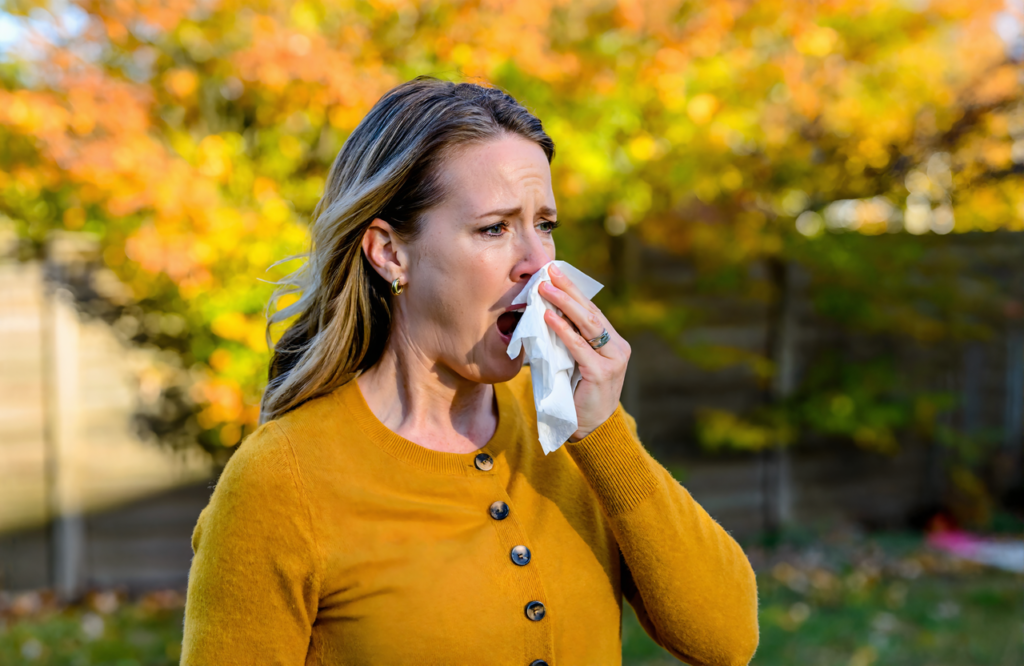
If you can’t tell whether you’ve got a cold or seasonal allergies, check three things: fever, itchy eyes, and how it started. A cold can bring a low fever and body aches and usually clears in seven to 10 days. Allergies never cause a fever, they make your eyes itch and water, and they flare the moment you’re around a trigger like ragweed pollen. That single distinction, fever or no fever, sorts most cases.
Late summer into fall is peak confusion season here in Covington and across St. Tammany Parish. Ragweed pollen starts around mid-August, peaks in September, and hangs on until the first frost, right when kids head back to school and cold viruses start passing around classrooms. So a runny nose in September could genuinely be either one. About 1 in 4 U.S. adults deals with seasonal allergies, according to the CDC, so you’re in good company trying to sort it out.
Is it a cold or allergies?
The fastest way to tell is to look at the whole picture, not one symptom. Colds are caused by viruses, they come on gradually over a day or two, and they run their course in about a week to 10 days. Allergies are your immune system reacting to something in the air, they show up fast when you’re exposed, and they stick around as long as the trigger does, which during ragweed season can mean weeks.
Here’s a side-by-side that covers the symptoms people mix up most:
If your eyes are itching like crazy and you feel fine otherwise, that points to allergies. If you’re achy, warm, and getting worse before you get better, that’s more likely a cold or another virus.

Can allergies cause a fever?
No. Allergies don’t cause a fever, full stop. That’s one of the most reliable ways to separate the two. People say “hay fever” out of habit, but seasonal allergic rhinitis doesn’t actually raise your temperature. So if you’ve got a real fever, look somewhere other than allergies, it’s more likely a cold, the flu, or a sinus or throat infection worth getting checked.
Are allergies contagious?
Not at all. You can’t catch allergies from anyone, and nobody can catch them from you. They’re your own immune system overreacting to pollen, dust, or pet dander. A cold, on the other hand, spreads easily from person to person, which is exactly why they tear through schools and offices this time of year. If everyone in the house comes down with the same runny nose within a few days, that’s a virus making the rounds, not the ragweed.
Why is fall so rough for allergies around Covington?
Ragweed is the main culprit. The American College of Allergy, Asthma and Immunology calls ragweed “the biggest allergy trigger in the fall,” and the numbers are wild: a single plant can produce up to one billion pollen grains, and each grain can travel more than 100 miles on the wind. That’s why staying indoors doesn’t fully spare you. The Northshore sits in a warm, humid corner of Louisiana with a long growing season, and our wider New Orleans metro area ranks #18 out of the 100 most challenging U.S. cities for allergies in the 2026 Allergy Capitals report from the Asthma and Allergy Foundation of America. Folks in Mandeville, Madisonville, Abita Springs, and Folsom feel it just as much as Covington does.
How do you treat a cold vs. allergies?
The two need different game plans, and matching the treatment to the cause is the whole point of telling them apart.
For a cold, it’s rest, fluids, and time. Antibiotics don’t work on viruses, so they won’t shorten a cold, and taking them when you don’t need them does more harm than good.
For allergies, the first move is avoiding your triggers when you can, then medication. Allergists point to intranasal corticosteroids as the single most effective class of allergy medicine, with antihistamines also widely used. If you’re not sure which over-the-counter option fits your symptoms, it’s worth asking a provider rather than guessing.
When a cold drags on, it can also turn into something bacterial. Most sinus infections start as viruses and clear on their own, but if your symptoms push past 10 days, or you start feeling better and then get noticeably worse again, that back-and-forth pattern (sometimes called double sickening) can point to a bacterial sinus infection that may need treatment. Our sinus infection care in Covington is a good place to sort that out.
When should you see a doctor on the Northshore?
If you’re stuck guessing, or things aren’t improving, that’s reason enough to get checked. Total Health Urgent Care sits right here in Covington, open every day from 7 AM to 7 PM, and walk-ins are always welcome, no appointment needed. We treat colds and the flu, sinus infections, sore throats and strep, and ear infections, and we offer rapid flu and strep swabs, COVID testing, lab work, plus on-site X-ray, all under one roof. If a lingering “cold” has crossed into sinus infection territory, our team can sort it out in one visit. See the complete list of what we treat, or just stop by, and we keep our self-pay pricing transparent and upfront.
For a true emergency, call 911 or head to the nearest ER right away: trouble breathing, chest pain, confusion, or bluish lips. Those are not cold-or-allergy symptoms and they need immediate care.
Quick FAQ
A cold usually runs about seven to 10 days and then fades. Allergy symptoms last as long as you’re exposed to the trigger, so during ragweed season that can stretch into weeks. Duration is one of the easiest tells: if it’s been going strong for two weeks with no fever, think allergies.
Absolutely, and fall is prime time for the overlap since ragweed and cold viruses are both active. If allergy symptoms suddenly come with a fever, body aches, or that run-down feeling, you may have picked up a virus on top of your allergies. When they layer together like that, it’s worth getting evaluated.
Not reliably. Mucus color changes for lots of reasons and isn’t a dependable way to separate a cold from allergies or to prove you need antibiotics. Focus instead on fever, itchy eyes, how it started, and how long it’s lasted.
Yes. We offer flu shots along with cold and flu care, and fall is the right time to get one before flu season ramps up. You can walk in seven days a week.
Nope. Walk-ins are welcome all week, 7 AM to 7 PM. Have a question first? Phone the clinic at (985) 400-5370 anytime before you head over.
Prepared by the Total Health Urgent Care team; founded by Jennifer Duncan, APRN, MSN, FNP-C, whose background spans over two decades of emergency and urgent care. This article is for general education and isn’t a substitute for personal medical advice, so if your symptoms have you worried, see a provider.