
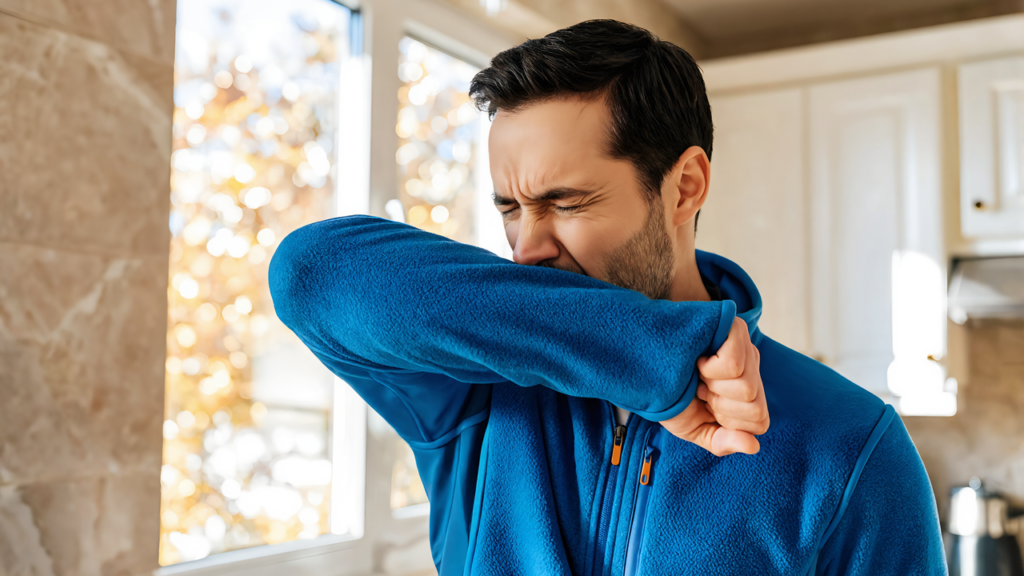
What are walking pneumonia symptoms? The usual signs are a cough, sore throat, headache, chills, a low-grade fever, extreme tiredness, and chest pain or discomfort. Cleveland Clinic lists all seven on its Atypical (Walking) Pneumonia page, where it describes walking pneumonia as a lung infection that causes mild symptoms and says you may feel like you have a bad cold. Mild isn’t the same as nothing, though, and a cough that keeps getting worse deserves a closer look.
Getting that closer look doesn’t require an appointment, since walk-ins are welcome at our Covington urgent care clinic. Total Health Urgent Care is just north of downtown, near the crossroads of Highway 190 and Highway 25, and its 7 AM to 7 PM schedule runs all seven days of the week. Our list of urgent care services includes X-rays done on site, for illness as well as injury, plus lab testing.
Walking pneumonia at a glance, drawn from that same Cleveland Clinic walking pneumonia page:
- What it is: a mild form of pneumonia, most often caused by atypical bacteria, including Mycoplasma pneumoniae.
- How it spreads: through coughing and sneezing or sharing cups or utensils.
- How it’s checked: an exam, a listen to your lungs, pulse oximetry, and a chest X-ray, sometimes with additional tests to find the cause.
- When to call 911: struggling to breathe or short of breath while sitting still, symptoms that rapidly worsen over minutes to hours, new or worsening chest pain, blue or gray skin, lips or nails, or confusion.
What are the most common walking pneumonia symptoms?
Walking pneumonia symptoms commonly include a cough, fever, chest pain, mild chills, and headache, among others, according to the American Lung Association’s What Is Walking Pneumonia? article. That ALA article says walking pneumonia feels more akin to a bad cold, and that symptoms can be mild enough that you can continue your daily activities, which is where the word “walking” comes from.
MedlinePlus adds detail in its Mycoplasma pneumonia article: the cough is usually dry and not bloody, the fever may be high, and excessive sweating shows up among the common symptoms. Symptoms are often mild and appear over 1 to 3 weeks, though they may become more severe in some people.
What are walking pneumonia symptoms in adults?
For walking pneumonia symptoms in adults, the MedlinePlus Mycoplasma pneumonia article flags a few things worth knowing: Mycoplasma pneumonia usually affects people younger than 40, cough and weakness can last for up to a month in untreated adults, and the disease can be more serious in older adults and in those with a weakened immune system.
Cleveland Clinic’s walking pneumonia page says you’re more likely to get walking pneumonia if you:
- Are 2 or younger
- Are 65 or older
- Have a weakened immune system
- Have a lung or airway disease, like asthma or COPD (chronic obstructive pulmonary disease)
- Live or work in crowded places, like schools, dormitories, long-term care facilities or military housing
- Use tobacco products
- Regularly use inhaled corticosteroids
The American Lung Association’s Pneumonia Symptoms and Diagnosis page notes that older adults with pneumonia may even have a lower-than-normal temperature and changes in mental awareness.

Walking pneumonia vs. bronchitis: which one is it?
Bronchitis inflames the airways, while pneumonia inflames the lungs themselves. Cleveland Clinic’s bronchitis page explains that bronchitis causes inflammation and mucus in your trachea and bronchi, while pneumonia causes inflammation and fluid in the small sacs in your lungs (alveoli). The MedlinePlus Mycoplasma pneumonia article says it may be hard for your health care provider to tell whether you have pneumonia, bronchitis, or another respiratory infection, so you may need a chest x-ray.
Here’s our own side-by-side, compiled from the two Cleveland Clinic pages credited right below the table:
Table sources: Cleveland Clinic bronchitis page (bronchitis column) and Cleveland Clinic walking pneumonia page (walking pneumonia column).
On the bronchitis side, that Cleveland Clinic bronchitis page says bronchitis is caused by a virus 95% of the time, so taking antibiotics won’t help you get over it in most cases, and a persistent cough that lasts one to three weeks is its main symptom. On the walking pneumonia side, the Cleveland Clinic walking pneumonia page names Mycoplasma pneumoniae among the atypical bacteria behind it, says your provider may prescribe antibiotics if bacteria are causing the infection, and notes you might cough for a few weeks after antibiotics and rest. If walking pneumonia sounds more like you, that Cleveland Clinic walking pneumonia page says to see a healthcare provider if you think you have pneumonia. If bronchitis sounds more like you, see our guides on how long bronchitis lasts and on a lingering cough in Covington.
Is walking pneumonia contagious?
Yes. Cleveland Clinic’s walking pneumonia page says the germs that cause it are contagious and usually spread through coughing and sneezing or sharing cups or utensils, and it advises avoiding others while you have walking pneumonia to prevent spreading the illness. Cleveland Clinic’s Health Essentials article Walking Pneumonia vs. Pneumonia says conventional wisdom holds that people with walking pneumonia start feeling unwell within two weeks of being exposed, though it can sometimes take up to a month, and you may be contagious throughout that incubation period even though you have no symptoms.
To prevent spreading the germs, the Cleveland Clinic walking pneumonia page recommends covering your nose and mouth when you sneeze or cough (but not with your hands) and washing your hands with soap and clean water frequently for at least 20 seconds. The American Lung Association’s walking pneumonia article notes there is no vaccine for viral or mycoplasma pneumonia, though certain individuals should get vaccinated for pneumococcal pneumonia, and it recommends a flu vaccine each year to help prevent pneumonia caused by the flu. Total Health’s services page lists seasonal flu shots.
How long does walking pneumonia last?
The American Lung Association’s walking pneumonia article says most people start to feel better within three to five days, but a cough from pneumonia can last weeks or months after treatment. In Walking Pneumonia vs. Pneumonia, Cleveland Clinic pulmonologist Neal Chaisson, MD, gives the same recovery advice no matter how severe your pneumonia is: “Expect that it will take a few weeks until you’re up and running at full speed again.”
“Recovery time will vary from person to person and will depend on whether you have other medical problems, such as asthma or COPD,” says Dr. Albert Rizzo, the American Lung Association’s Chief Medical Officer, in that ALA walking pneumonia article. He adds, “Too slow a pace of recovery or any worsening of symptoms is information you should share with your healthcare provider.”
Do you need a chest X-ray for walking pneumonia?
If pneumonia is suspected, your provider will likely order a chest x-ray, according to the MedlinePlus Community-acquired pneumonia in adults article. Cleveland Clinic’s Walking Pneumonia vs. Pneumonia article says a provider will likely diagnose you based on a chest X-ray. The National Heart, Lung, and Blood Institute’s Pneumonia Diagnosis page says a chest X-ray is often used to diagnose pneumonia and looks for inflammation in your lungs. A chest X-ray is quick, too: RadiologyInfo.org’s Chest X-ray (Radiography) page says the entire chest x-ray examination is usually completed within 15 minutes.
Total Health handles X-rays on site, and our primary care page describes on-site lab and X-ray for same-visit answers. Self-pay prices sit right on our pricing and insurance page: X-rays run $75 for self-pay patients, while the $130 self-pay office visit already includes the exam, referrals, and any medication prescribed. Since Total Health offers a long list of services, the pricing page recommends calling (985) 400-5370 before you visit if you want an accurate estimate before paying out of pocket. Insured? Most major health insurance plans are welcome at Total Health, which can bill the insurance companies directly, so bring your primary and secondary insurance cards (if applicable).
How is walking pneumonia treated?
Cleveland Clinic’s walking pneumonia page says treatment for walking pneumonia depends on the cause: if bacteria are causing the infection, your provider may prescribe antibiotics such as macrolides, fluoroquinolones, or tetracyclines. If a virus is behind it, you probably won’t be able to treat it with medication, though a provider might prescribe antiviral medications for the flu or COVID-19.
The MedlinePlus Mycoplasma pneumonia article says most people recover completely without antibiotics, although antibiotics may speed recovery. Cleveland Clinic’s Walking Pneumonia vs. Pneumonia article adds that antibiotics may be necessary if your symptoms are particularly bad or hang around for more than two weeks.
While you recover, Dr. Rizzo says in that ALA walking pneumonia article, “it’s important to get lots of rest, drink plenty of fluids and take fever-reducing medicine if you have a fever.” The MedlinePlus Mycoplasma pneumonia article adds two cautions: don’t take cough medicines without first contacting your provider, and don’t give aspirin to children because it may cause a dangerous illness called Reye syndrome.
What does walking pneumonia look like in kids?
Nemours KidsHealth’s Walking Pneumonia in Kids guide tells parents that when it seems like a cold is lasting longer than 7 to 10 days, especially if a cough is getting worse or not going away, it could be walking pneumonia. Symptoms on that KidsHealth list include a fever of 101°F (38.5°C) or below, a cough that can last for weeks to months, fatigue, chest pain or stomach pain, and fast breathing or breathing with grunting or wheezing sounds, among others.
That KidsHealth walking pneumonia guide also says even a child who feels fine should stay home for a few days until antibiotic treatment kicks in and symptoms improve. KidsHealth’s Pneumonia in Kids page says to go to a hospital emergency room right away if your child has chest pain or trouble breathing, or lips or fingers that look blue.
When is walking pneumonia an emergency?
For a medical emergency, call 911. Cleveland Clinic’s walking pneumonia page names these as reasons for the ER or a 911 call:
- You struggle to breathe or are short of breath while sitting still
- Your symptoms are rapidly worsening over minutes to hours
- You have new or worsening chest pain
- Your skin, lips or nails turn blue or gray
- You’re confused or can’t think clearly
Where can I get checked for walking pneumonia near Covington?
If you’re typing urgent care near me with a cough that won’t quit, the best urgent care for a stubborn chest cough is one that’s open when you’re sick, takes walk-ins, posts its prices, and has X-ray on site. Here’s how our walk-in clinic in Covington, LA, near Highway 25, stacks up:
- Open daily: 7 AM to 7 PM, including Saturdays and Sundays.
- No appointment: walk-ins are welcome.
- Prices up front: $130 self-pay visits and $75 self-pay X-rays.
- Testing under one roof: on-site X-rays, rapid COVID testing, and on-site lab testing for flu, strep, and RSV.
- Specialist referrals: sent based on patient need.
- Experience: more than 25 years of ER and urgent care work behind Jennifer Duncan, APRN, MSN, FNP-C.
Folsom and Franklinton sit close to our office, and St. Benedict, Mandeville, Abita Springs, and Madisonville are on our list of communities served.
Common questions about walking pneumonia
Early on, walking pneumonia often feels like a bad cold, with a sore throat, headache, tiredness, and a cough, and MedlinePlus says symptoms often appear over 1 to 3 weeks. For kids, the KidsHealth walking pneumonia guide says a cold lasting longer than 7 to 10 days, especially with a cough that is getting worse or not going away, could be walking pneumonia.
Yes, it can be. Cleveland Clinic’s Walking Pneumonia vs. Pneumonia article says conventional wisdom holds that people start feeling unwell within two weeks of exposure, though it can take up to a month, and that you may be contagious throughout that incubation period even without symptoms.
Often, yes. MedlinePlus says most people recover completely without antibiotics, although antibiotics may speed recovery. Cleveland Clinic’s Walking Pneumonia vs. Pneumonia article adds that antibiotics may be necessary if symptoms are particularly bad or hang around for more than two weeks.
No. The American Lung Association says there is no vaccine for viral or mycoplasma pneumonia. The ALA recommends a flu vaccine each year to help prevent pneumonia caused by the flu, and notes that certain individuals should get vaccinated for pneumococcal pneumonia.
Yes, try to. Cleveland Clinic advises avoiding others while you have walking pneumonia to prevent spreading the illness, and the KidsHealth walking pneumonia guide says even a child who feels fine should stay home for a few days until antibiotic treatment kicks in and symptoms improve.
At our Covington clinic, a self-pay X-ray costs $75. Self-pay office visits are $130, a price that already includes the exam, referrals, and any medication prescribed. For an exact out-of-pocket estimate, call (985) 400-5370 ahead of time.
Still coughing a week later and feeling wiped out? Stop by Suite A of 73015 Hwy 25 (Covington, LA 70435) any day, from the 7 AM opening to the 7 PM close. Questions first? Our phone number is (985) 400-5370.
The Total Health Urgent Care team prepared these walking pneumonia notes for Northshore neighbors. Our Hwy 25 clinic was founded by longtime ER and urgent care clinician Jennifer Duncan, APRN, MSN, FNP-C, bringing more than 25 years of that experience to it. This article shares general health information and can’t diagnose you, so talk with a provider about your own symptoms.